Reviewing Wildflower Mindset Floral Lettering for Embroidery
As a designer who has spent countless hours digitizing and stitching out thousands of designs, I have learned to look past the glossy mockups. What matters is how a design behaves under the needle. When I first opened the files for Wildflower Mindset Floral Lettering, my immediate reaction was one of cautious optimism. The concept is trendy, blending modern typography with organic botanical elements, but trends can often be tricky to translate into thread. This review breaks down how this specific set of Illustrations and Graphics holds up when moved from a digital screen to actual fabric.
First Impressions and Visual Mood
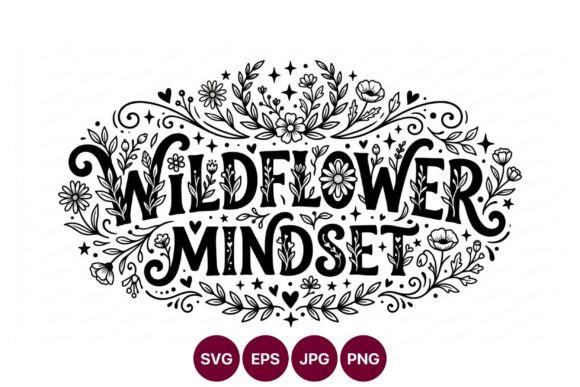
The design features black and white line art lettering that reads "wildflower mindset," surrounded by floral ornamentation, stars, hearts, and leaves. Visually, it creates a mood that is both grounded and whimsical. It speaks to the current cultural shift toward mindfulness and nature-connectedness, which makes it highly marketable for Etsy sellers and craft business owners targeting the wellness or boho-chic demographic. The layout is balanced, with the text serving as the anchor while the decorative elements provide movement. However, because the source files are provided as SVG, PNG, JPG, and EPS, rather than native embroidery formats like DST or PES, the burden of translation falls on you, the creator. This is a crucial distinction. You are not buying a ready-to-stitch machine embroidery design; you are buying high-quality design assets that require digitizing.
Real-World Application: The Tote Bag Test
To evaluate its practicality, I visualized this design on a heavy-duty canvas tote bag. This is a common small shop product that requires durability and visual impact. The phrase "wildflower mindset" suggests growth and resilience, making it an excellent choice for a personalized gift or a boutique branding item. In this scenario, the floral ornamentation would need to be simplified. If you were to stitch every tiny leaf and star exactly as they appear in the line art, you risk creating a dense cluster of stitches that could pucker the canvas. Instead, I recommend using a combination of satin stitch for the lettering to give it a raised, premium feel, and running stitch or light fill stitch for the surrounding botanicals. This approach maintains the airy, hand-drawn aesthetic of the original Illustrations while ensuring the finished product remains flexible and durable.
Navigating Fabric and Stitch Challenges
One of the biggest challenges with line-art-based Graphics is maintaining clarity on textured fabrics. If you plan to use this on a fuzzy sweatshirt or a thick towel, the fine details of the stars and small leaves may get lost. For sweatshirt embroidery, I advise increasing the stroke width of the lettering and simplifying the floral elements into broader shapes. Conversely, on smooth cotton or linen, such as a kitchen towel or a baby onesie, the design can shine with more intricacy. However, for baby embroidery, you must ensure there are no long, loose threads that could pose a safety hazard. Using a tight stitch density and securing all jump stitches is non-negotiable here.
Another critical consideration is the hoop size. This design, with its sprawling floral accents, likely requires a medium to large hoop, such as a 5x7 or 6x10 inch frame. Attempting to cram this into a 4x4 hoop would compromise the legibility of the word "mindset" and crush the delicate balance of the composition. Always check your machine’s maximum hoop size before committing to a project. Additionally, when working on stretchy fabrics like jersey knits for t-shirts, a cut-away stabilizer is essential to prevent distortion. The weight of the thread combined with the pull of the design can easily warp lightweight fabrics if not properly supported.
Commercial Viability and Brand Consistency
For commercial embroidery projects, consistency is key. Since you are working from vector and raster files, you have the freedom to adjust colors to match specific brand palettes. This flexibility is a significant advantage over pre-digitized designs that come with fixed color sequences. You can choose thread colors that complement your client’s branding, whether that means earthy greens and browns for a natural skincare brand or vibrant pinks and purples for a youth-oriented boutique. This adaptability enhances brand consistency and increases the perceived value of your handmade product.
However, remember that selling items made from these design assets requires careful attention to licensing. While the download includes versatile file formats, you must confirm whether the license allows for commercial use of the final stitched items. Most designers allow you to sell physical products, but reselling the digital files themselves is typically prohibited. Always read the terms included in the ZIP folder to protect your craft business from legal issues.
Practical Designer Notes for Success
Before launching into a full production run, treat this as a prototype phase. Here are my top recommendations for working with Wildflower Mindset Floral Lettering:
- Test on Scrap Fabric: Never stitch directly on your final garment. Use a similar fabric scrap to test tension and registration.
- Check Contrast: Since the original art is black and white, ensure your chosen thread colors stand out against the fabric. A dark thread on a dark shirt will render the design invisible.
- Simplify Details: When digitizing, consider removing the smallest stars or merging tiny leaves into larger clusters to reduce stitch count and improve clarity.
- Mockup First: Use the included PNG or JPG files to create printable mockup previews for your online store. This helps customers visualize the embroidered patch or apparel before you even stitch a single thread.
- Stabilizer Selection: Match your stabilizer to the fabric. Use tear-away for stable wovens and cut-away for knits to ensure longevity after washing.
Final Verdict
Wildflower Mindset Floral Lettering is a strong candidate for creators who want to offer meaningful, aesthetically pleasing custom apparel and home goods. It is not a plug-and-play solution, but rather a versatile foundation for creative interpretation. By understanding the limitations of line art in embroidery and applying proper digitizing techniques, you can transform these Graphics into high-value holiday embroidery gifts, wedding favors, or everyday wearables. The key lies in respecting the balance between the delicate artistic intent and the robust realities of thread and fabric. With careful planning and testing, this design can become a staple in your portfolio, appealing to customers who appreciate both style and substance in their personalized gift choices.